
Road trips
Mae Hong Son Loop
Plan the Mae Hong Son Loop from Chiang Mai with 3- and 5-day route ideas, optional detours and practical road-trip advice.
Updated 14 November 2026
The Mae Hong Son Loop crosses some of Northern Thailand’s most memorable mountain scenery, linking Chiang Mai, Pai, Mae Hong Son and Mae Sariang. The main circuit is about 600 km; detours can make your trip considerably longer. You can travel by car or motorbike, stopping at villages, viewpoints, cafés and temples as you go. The best pace depends on how much time you want away from the road.
A multi-day mountain route
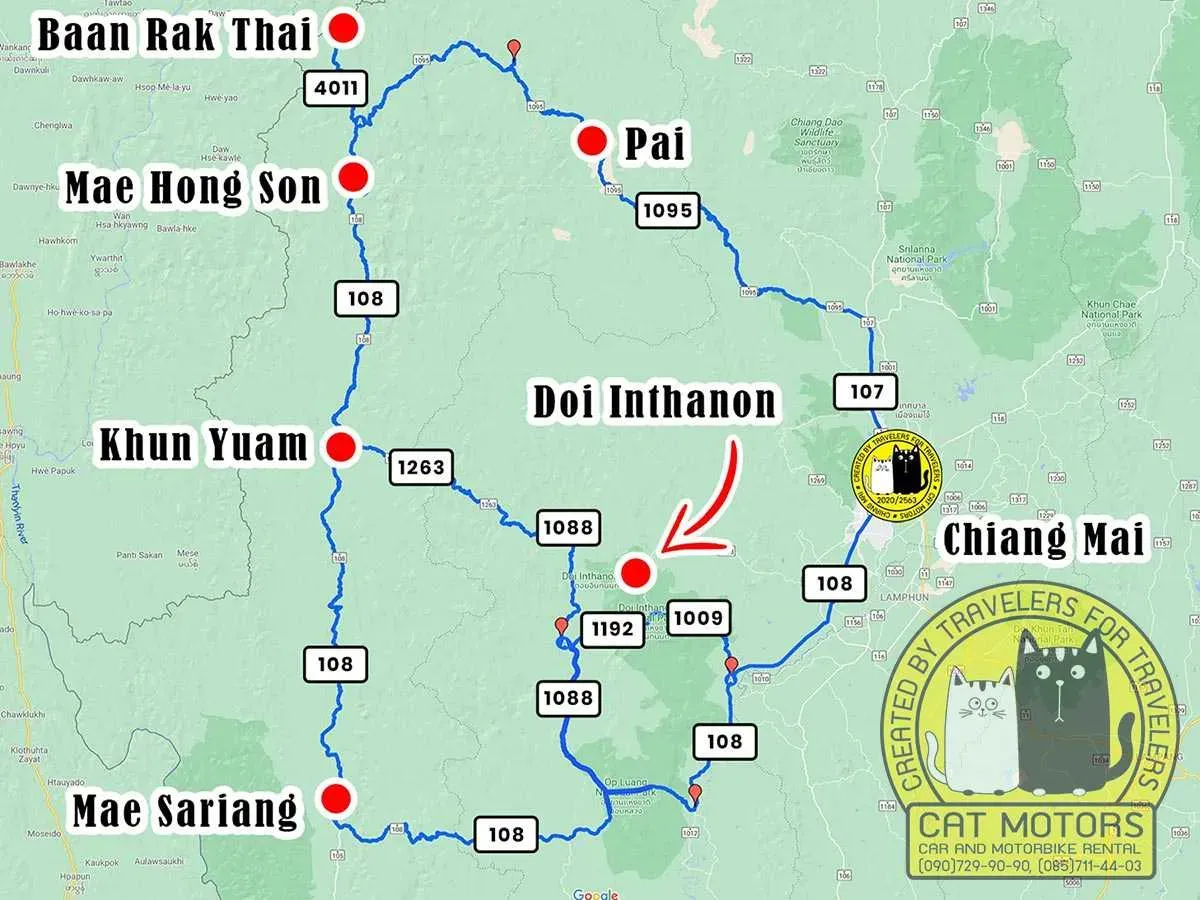
The route can be driven in either direction. One common version heads first to Pai, crosses Pang Mapha on the way to Mae Hong Son, then returns via Mae Sariang. Reverse the order if it suits you better. The diagram shows the main loop, not every road or possible detour; use a live map when planning.
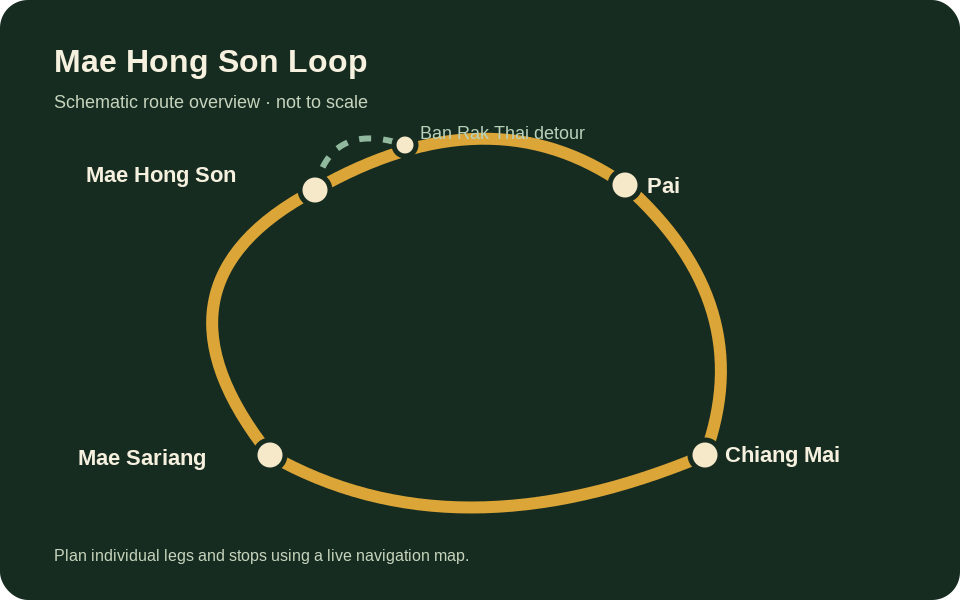
The road and the views
The loop moves between forested hills, valleys, and small towns, with a different view around almost every bend. The roads are paved on the main circuit, though rain can change conditions. Decide how many overnight stops you want rather than trying to fit the entire route into one rushed itinerary.
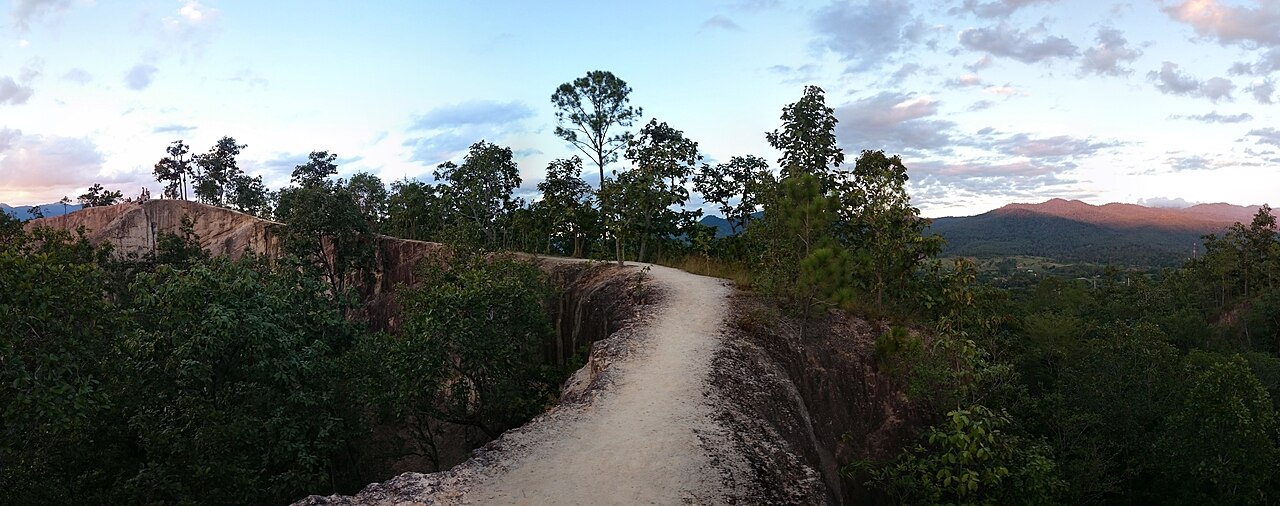
Stops along the loop
Popular stops include Pai, Mae Hong Son town, mountain viewpoints, temples, hot springs, waterfalls, and local markets. Ban Rak Thai is a scenic detour north of Mae Hong Son, with a lake and hillside village. You can spend more time in any of these places or add other stops that interest you.
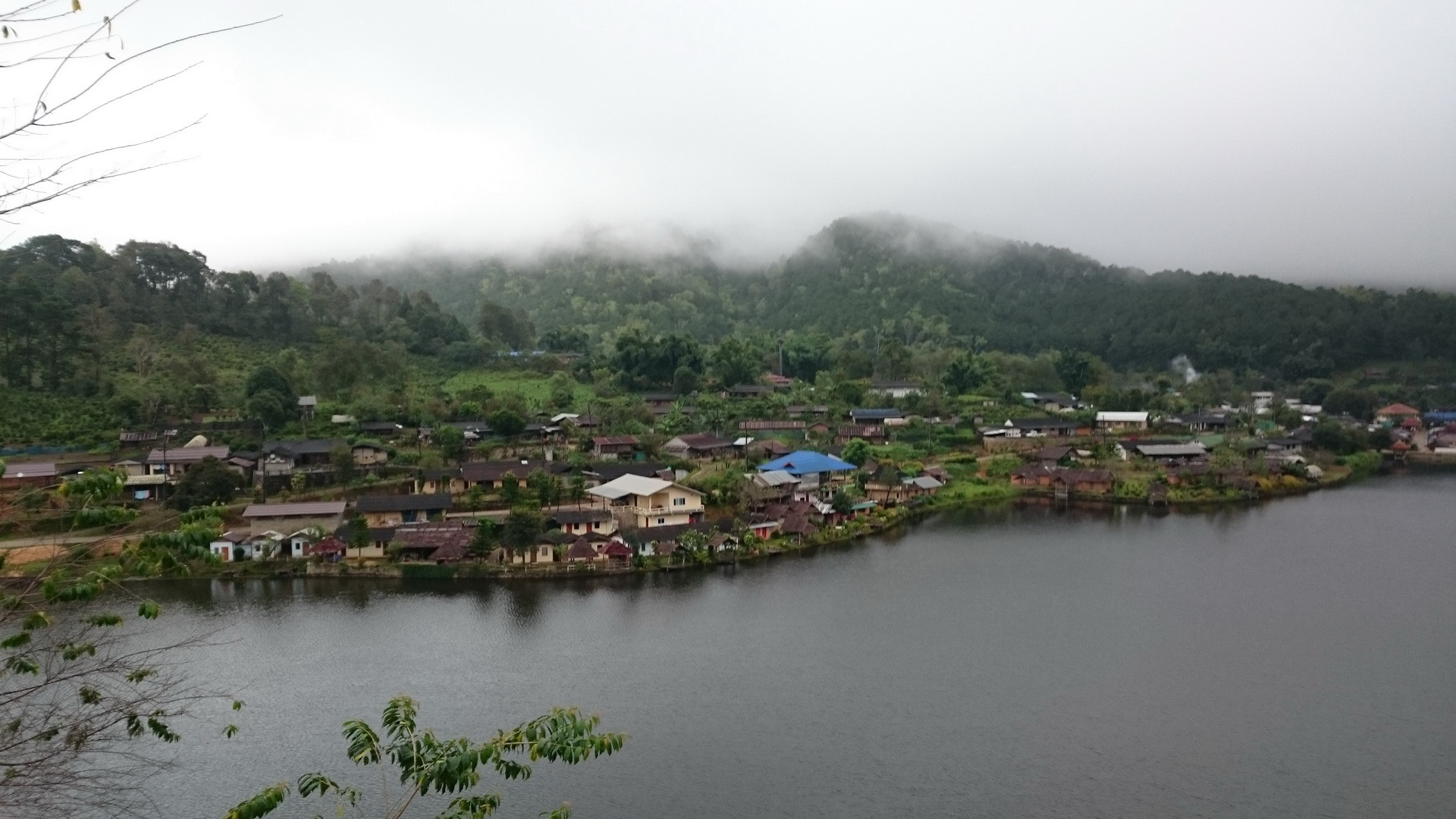
Village and market stops bring local food, crafts, and everyday life into the route. A Google Maps directions link can help you inspect the main circuit and adjust it to your trip.
Pang Oung: a camping detour
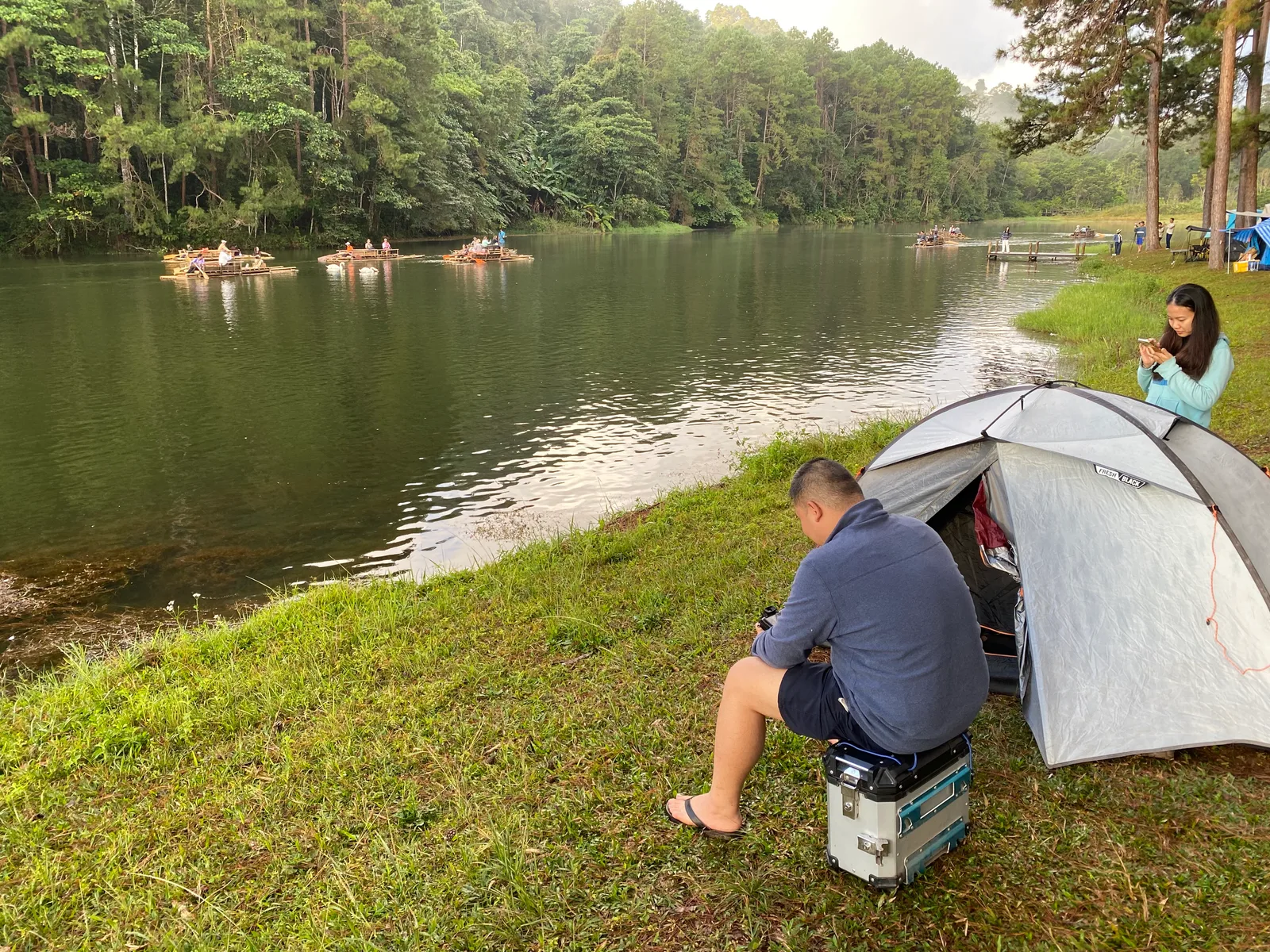
Many travellers make a side trip from Mae Hong Son to Pang Oung (also spelled Pang Ung), a pine-lined lake where you can camp by the water. I went camping there with friends; the lake and forest made it a memorable stop. It is off the main loop, so allow extra driving time and check current camping arrangements before you go.
How many days do you need?
You can cover the full circuit in three days if you are comfortable with long drives on winding roads and keep stops short. Five days gives you more time in the towns and for a detour. These are examples, not fixed tours or promises about travel time. Check road conditions, daylight and opening hours before each day’s drive.
Example 1: three days around the full loop
- Chiang Mai to Mae Hong Son via Pai: This combines two mountain legs in one day. Leave early, keep stops brief and stay in Mae Hong Son. If it is taking longer than expected, stop in Pai and add a day instead.
- Mae Hong Son to Mae Sariang: Follow Route 108 south via Khun Yuam. Stay in Mae Sariang.
- Mae Sariang to Chiang Mai: Complete the main circuit, with breaks along the way. Save larger detours for a longer trip.
Example 2: five days via Mae Sariang first
- Chiang Mai to Mae Sariang: Head southwest on Route 108, allowing time for breaks on the mountain road. Stay in Mae Sariang.
- Mae Sariang to Mae Hong Son: Continue north via Khun Yuam. Stay in Mae Hong Son.
- Mae Hong Son and surroundings: Explore town or make a return trip to Ban Rak Thai. Stay a second night in Mae Hong Son.
- Mae Hong Son to Pai: Travel east through Pang Mapha. Tham Lod cave is an optional detour if you have time. Stay in Pai.
- Pai to Chiang Mai: Finish the loop on the winding mountain road, with breaks along the way.
These examples use the main circuit mapped by Moto Mass and stops highlighted by the Tourism Authority of Thailand. Example 1 heads through Pai first; example 2 goes the other way via Mae Sariang. You can adjust the stops and length to suit your trip. The Golden Triangle Loop is a different route through Chiang Rai and the Mekong border area.
A mountain break in Pang Mapha
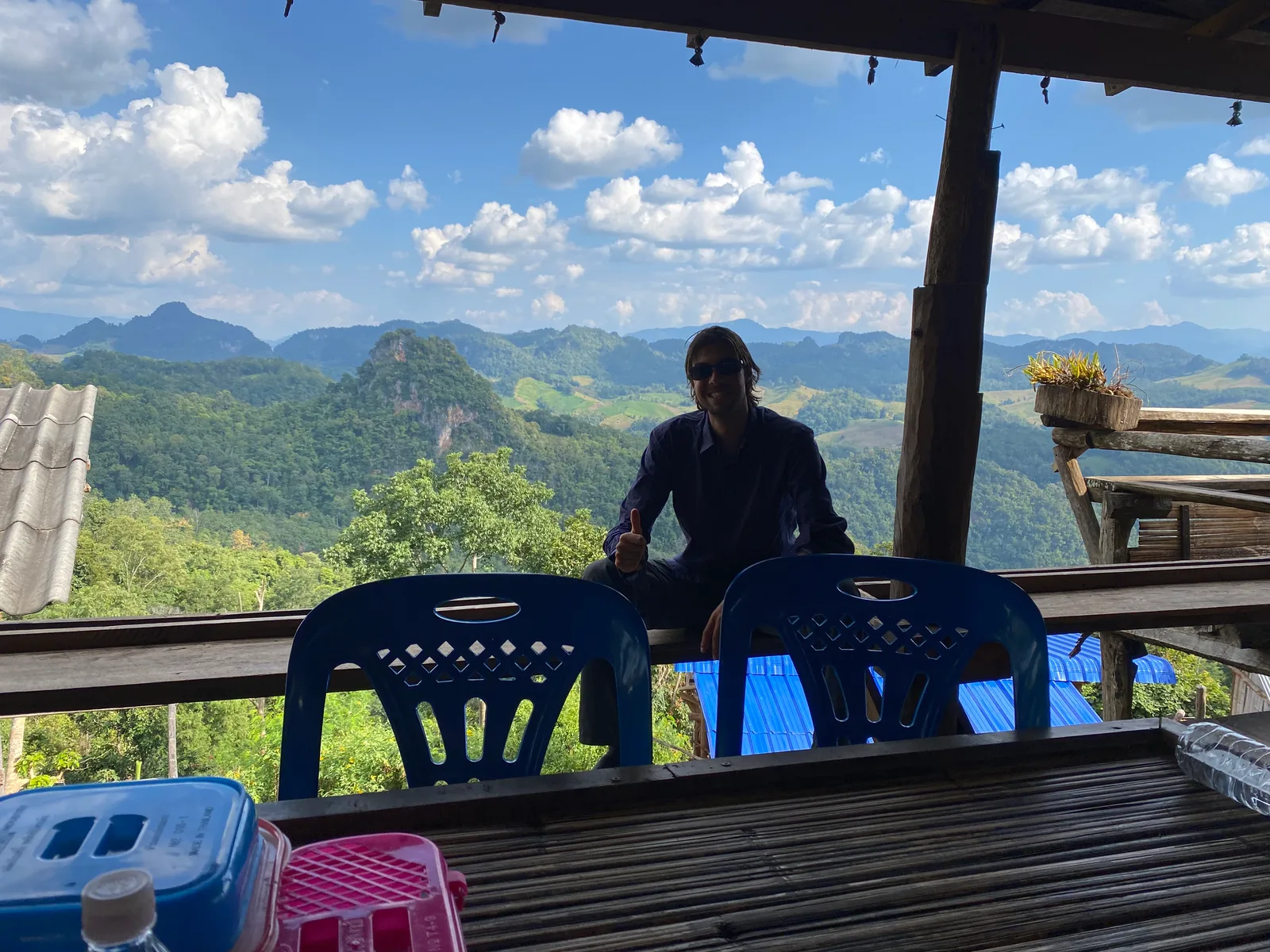
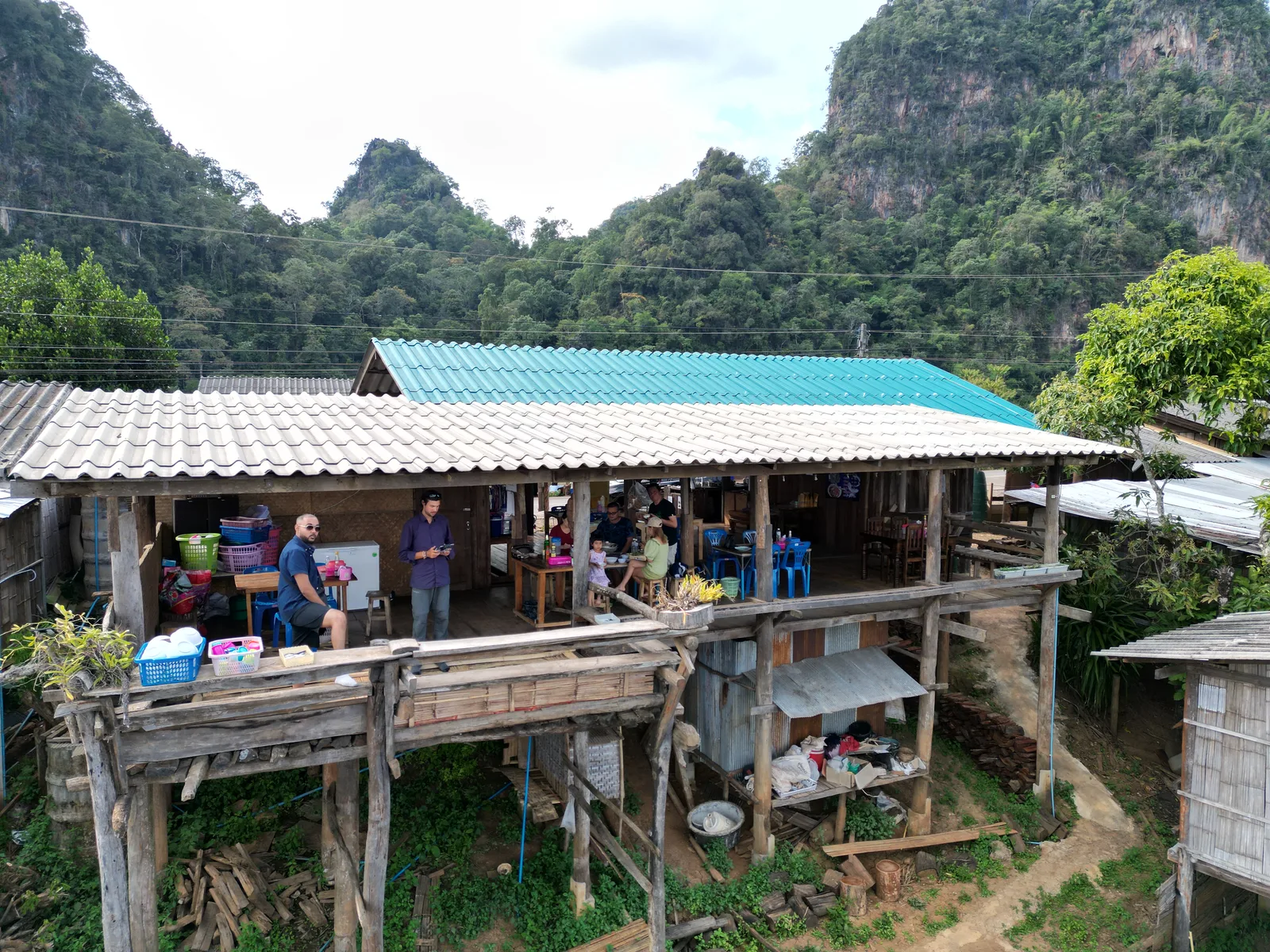
On our ride from Pang Oung toward Pai, my friends and I stopped in Pang Mapha for a meal and a view over the mountains. It was worth slowing down for. You can enjoy this stretch in either direction: coming from Pai, ride through Pang Mapha toward Mae Hong Son, then decide whether to add a detour to Pang Oung or Ban Rak Thai. Allow time for a break rather than treating the road as just a way to reach the next town.
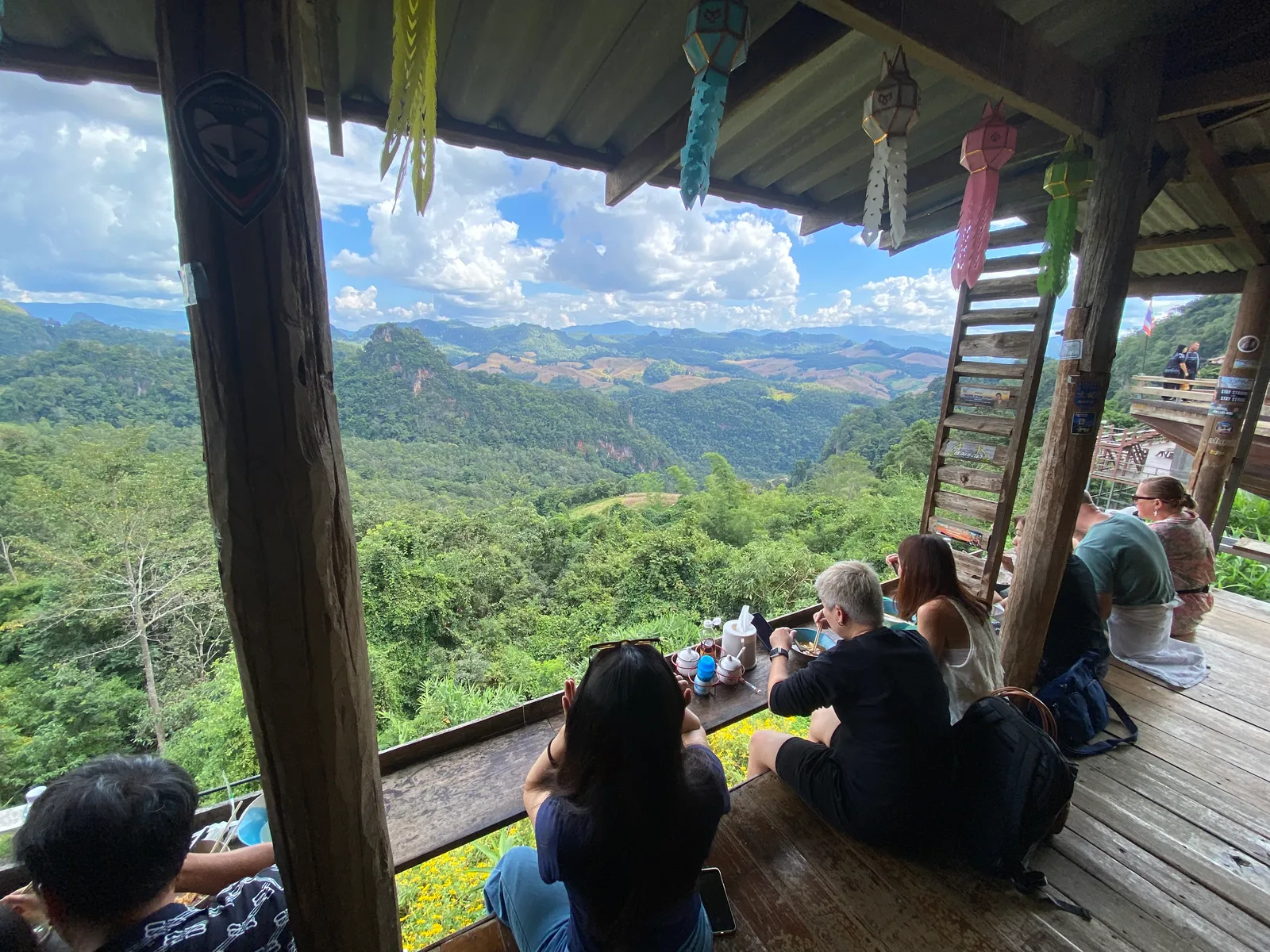
See two more photos from our Pang Mapha stop
Prepare your vehicle
People do ride this loop on 125cc bikes, especially when travelling light. A bike around 150cc or above can feel more comfortable in the mountains; 300cc and larger touring bikes offer more power for luggage or a passenger. More engine capacity is not required, but good tyres, brakes, and suspension make a noticeable difference over a long mountain route. A car is another option.
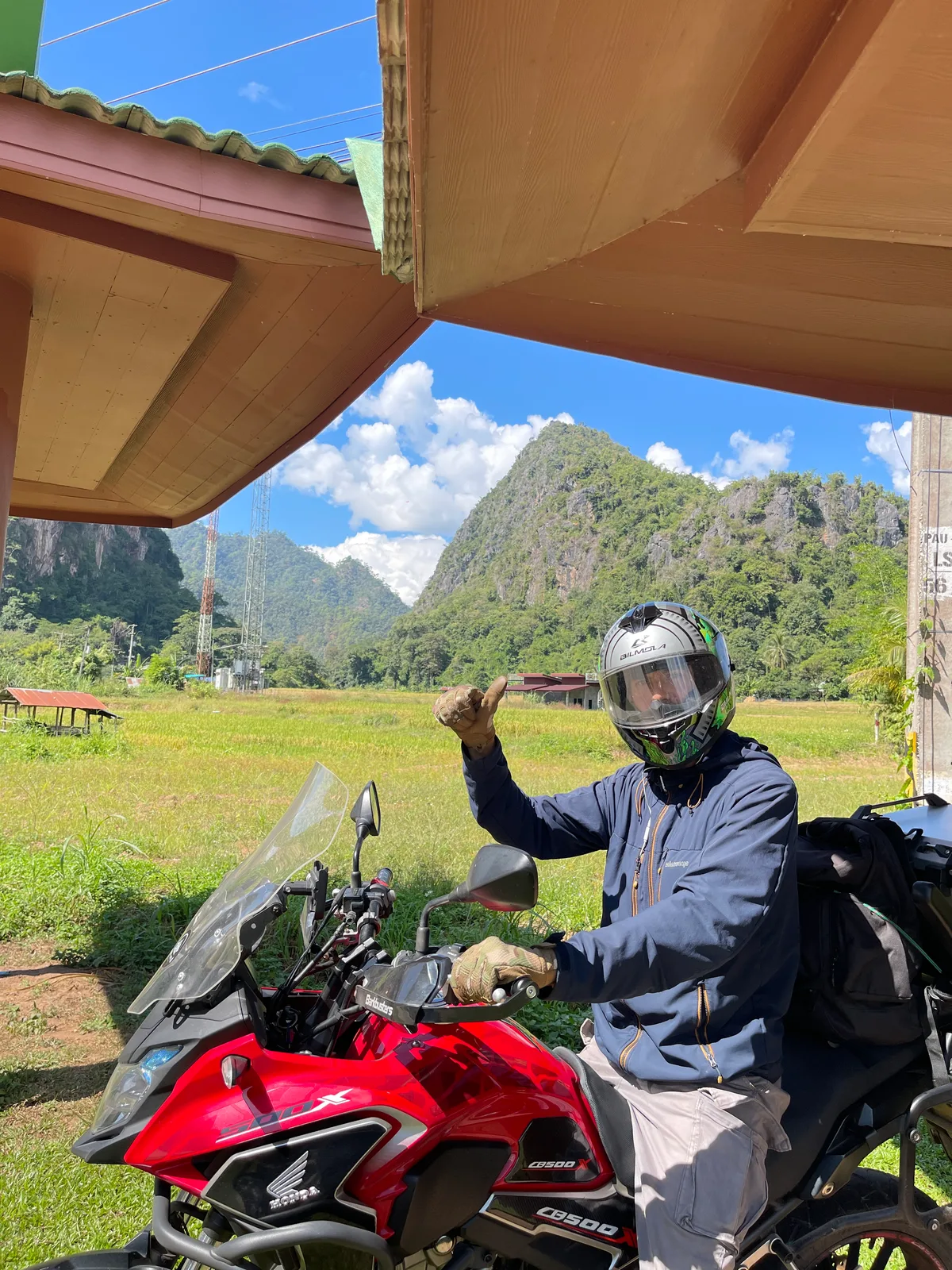
Accommodation is available in the main towns along the loop, so you can decide how long to spend in each place. Bring the documents and insurance you need for your vehicle, check its condition before leaving, and adjust your plans if weather or road conditions change. Save Thailand’s emergency numbers before setting off: our Tourist Police guide includes 1155, the nationwide hotline for visitors who need help, as well as medical, police and fire numbers. Enjoy the ride, but leave enough time to travel safely and stop when something catches your eye.